
One Equation, Any Domain
F = dp/dt works for physics. Epimechanics shows it works for anything that changes: beliefs, institutions, ecosystems. Same math, different substrate.
The mathematical grammar of change — derived from first principles, experiments designed, built collaboratively with AI.
A generalized mechanics built from causal events — and a new way of doing theoretical science.
F = dp/dt works for physics. Epimechanics shows it works for anything that changes: beliefs, institutions, ecosystems. Same math, different substrate.
Spacetime and quantum mechanics — including why amplitudes use complex numbers — derived from causal structure alone. No assumed physics.
Humans conceive the theory. AIs audit every proof, check every assumption, maintain consistency across papers. Faster iteration, fewer errors.
Two tracks: the conceptual framework and its physics foundations.
New here? Start with Foundations in the conceptual track.

The thesis that self-application is the single mechanism behind both entity formation and the diagonal phenomena (Cantor, Gödel, halting, Russell, Tarski). The seven core EMech definitions form a self-dual compact closed category, which is exactly the setting where Lawvere''s fixed point theorem applies.

Companies are not merely alive: they are auto-causal meta-entities with bonds, loops, and keystones. Epimechanics provides the grammar for reading their causal structure, predicting their dynamics, and understanding why the genome metaphor finally works.

The foundation beneath physics. The causal event primitive, the cause-plex, and the three structural properties from which spacetime, energy, and quantum mechanics emerge. No physics is assumed — physics is derived.
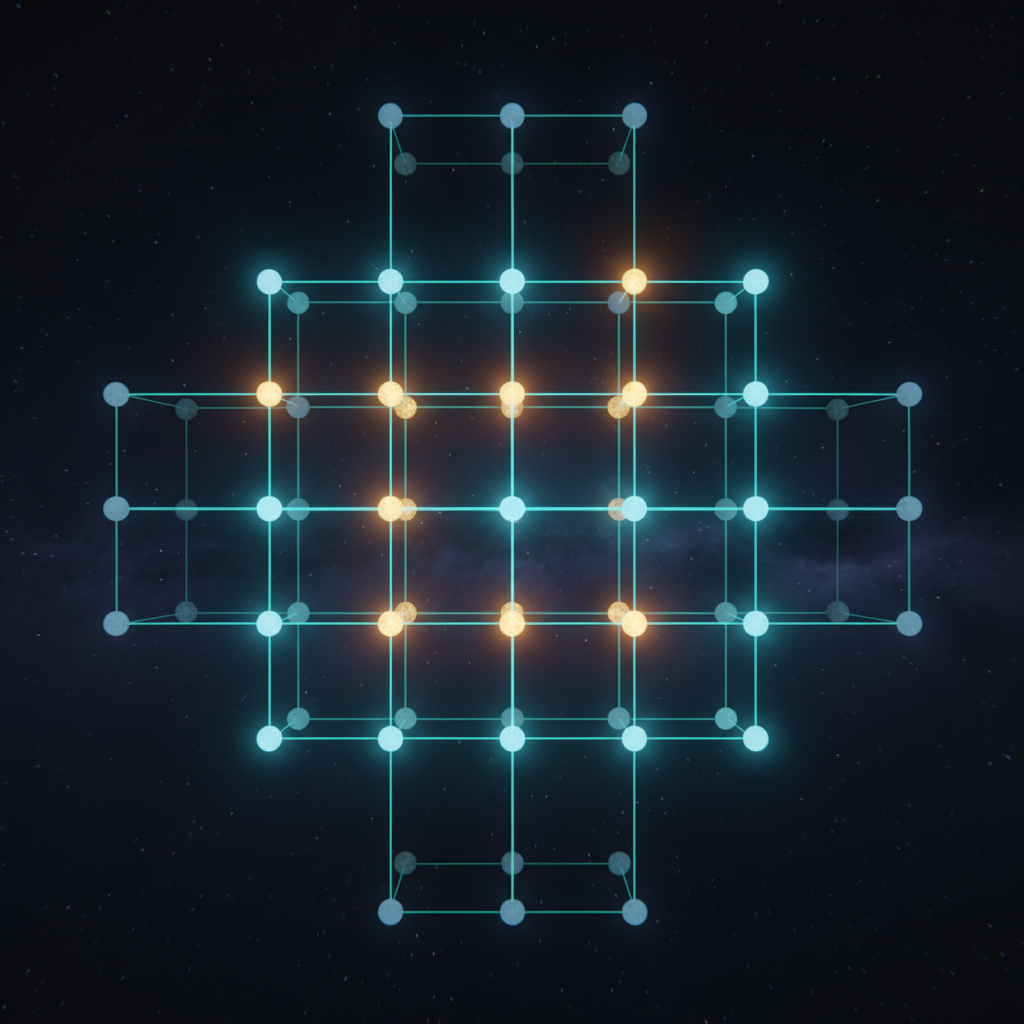
The periodic table of entities. What are things made of? Bonds and loops — the structural primitives that combine to produce everything from flames to corporations. This document defines the Structure Layer and Descriptor Layer of the epimechanical architecture.
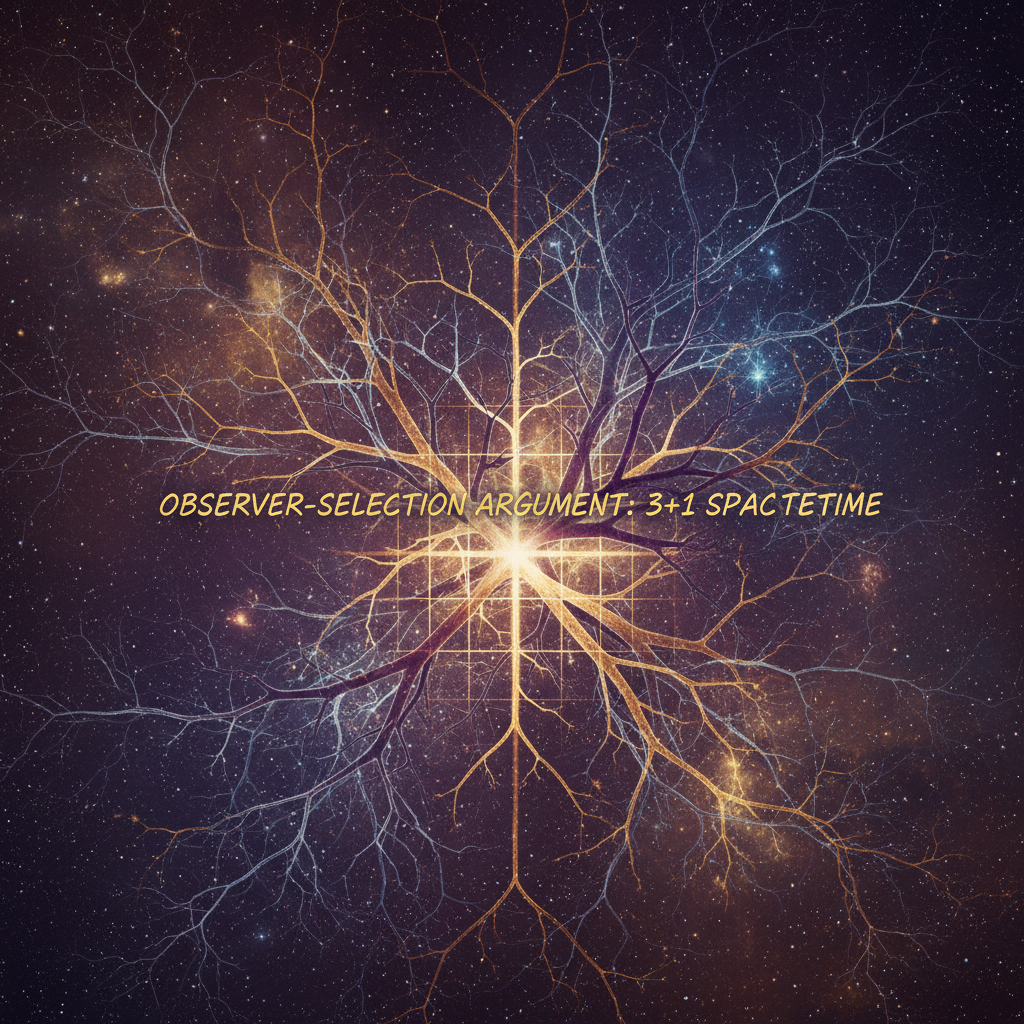
The cause-plex framework does not derive 3+1 dimensional spacetime from first principles. Instead, it explains why observers necessarily find themselves in 3+1 by showing that other dimensionalities fail to support the structural requirements for observer-class entities. This paper develops the selective convergence argument: n_t = 1 follows from the causal partial order; n_s = 3 follows from Tangherlini's orbital stability result and the knot-topology requirement for topologically non-trivial loop structures. The argument is honestly labeled as an observer-selection conjecture, not a derivation, and is shown to be strictly more defensible than Wolfram's singular convergence claim.
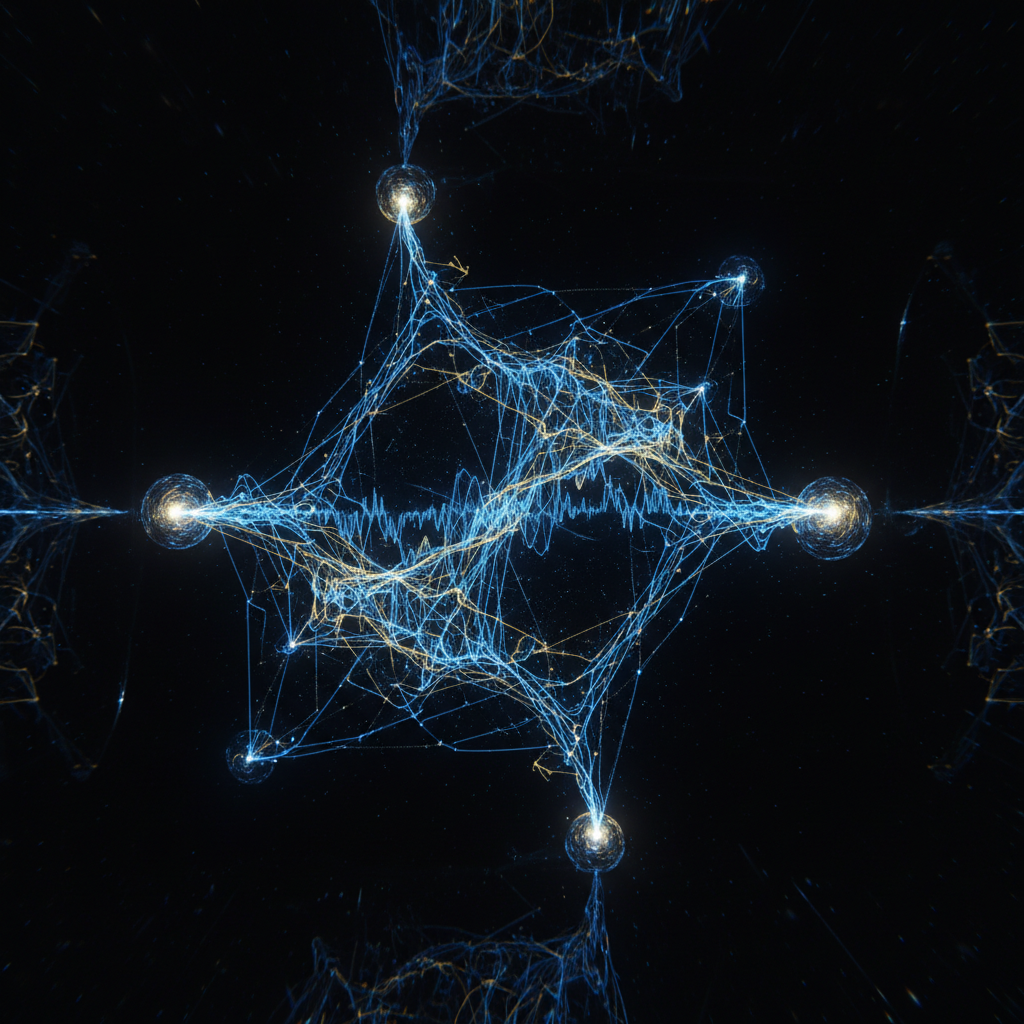
We derive quantum mechanical structure from the multiway cause-plex — the collection of all causally consistent histories consistent with a given initial state. Given Postulate Q' (the cause-plex is multiway), quantum mechanics follows via two convergent arguments: (1) Sorkin's grade-2 quantum measure — the minimal consistent probability theory on a multiway structure forces complex amplitudes; (2) a loop-phase argument native to the cause-plex — closed loop amplitude weights must form a minimal continuous group, which is uniquely U(1). The Wick rotation analogy provides corroborating structural motivation. Together these arguments, plus Gorard's continuum limit result, recover the full quantum formalism.